
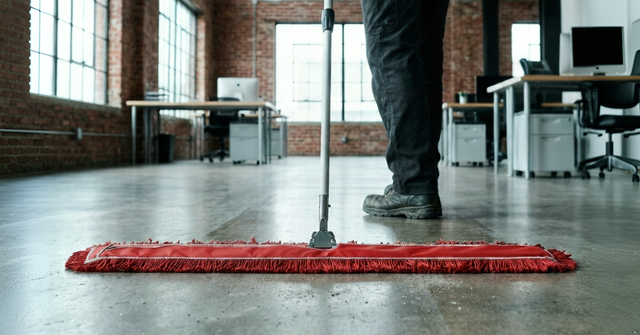
You can buy a mop for eight dollars. You can buy one for sixty. The eight-dollar mop looks like a deal right up until you're buying your fourth one this year. So what does "commercial grade" actually buy you?
It's a build spec, not a slogan
Stitched, not glued, so the head survives hundreds of wringings. Fibers dense enough to hold and release, not smear. A handle that won't flex or crack under a hard push. A head-to-frame connection that won't wobble loose in a month. Cheap tools cut every one of those corners. That's how they hit eight dollars. You feel it on day thirty, not day one.
Run the math
Say a disposable mop is $10 and lasts six weeks of daily use. That's about nine a year, roughly $90, plus the reorder time and the days you cleaned with a tool already past its prime. A Pro Color dust mop is $59.99 complete and runs for dozens of wash cycles, with $30.99 replacement heads instead of full swaps. Lower cost per use. Fewer reorders. Better cleaning the whole way. Built to last isn't a slogan when you run the numbers. It's the cheaper option wearing a bigger price tag.
Worn tools clean worse
A dying mop doesn't just break. It cleans badly for weeks first. Flattened fibers push dirt instead of lifting it. A loose head misses coverage. The cheap-mop tax isn't only the replacements. It's every mediocre clean in between.
FAQ
Is a commercial-grade mop worth it for a small business?
If you clean daily, yes. The higher up-front cost pays back fast in fewer replacements and better results. The cheap mop only wins if you barely use it.
How long should a commercial dust mop last?
The head runs dozens of wash cycles. The frame and handle last years. When a head wears out, you replace just the head.